TIG vs. MIG Welding: Which Process Is Right for Your Metal Fabrication Project?
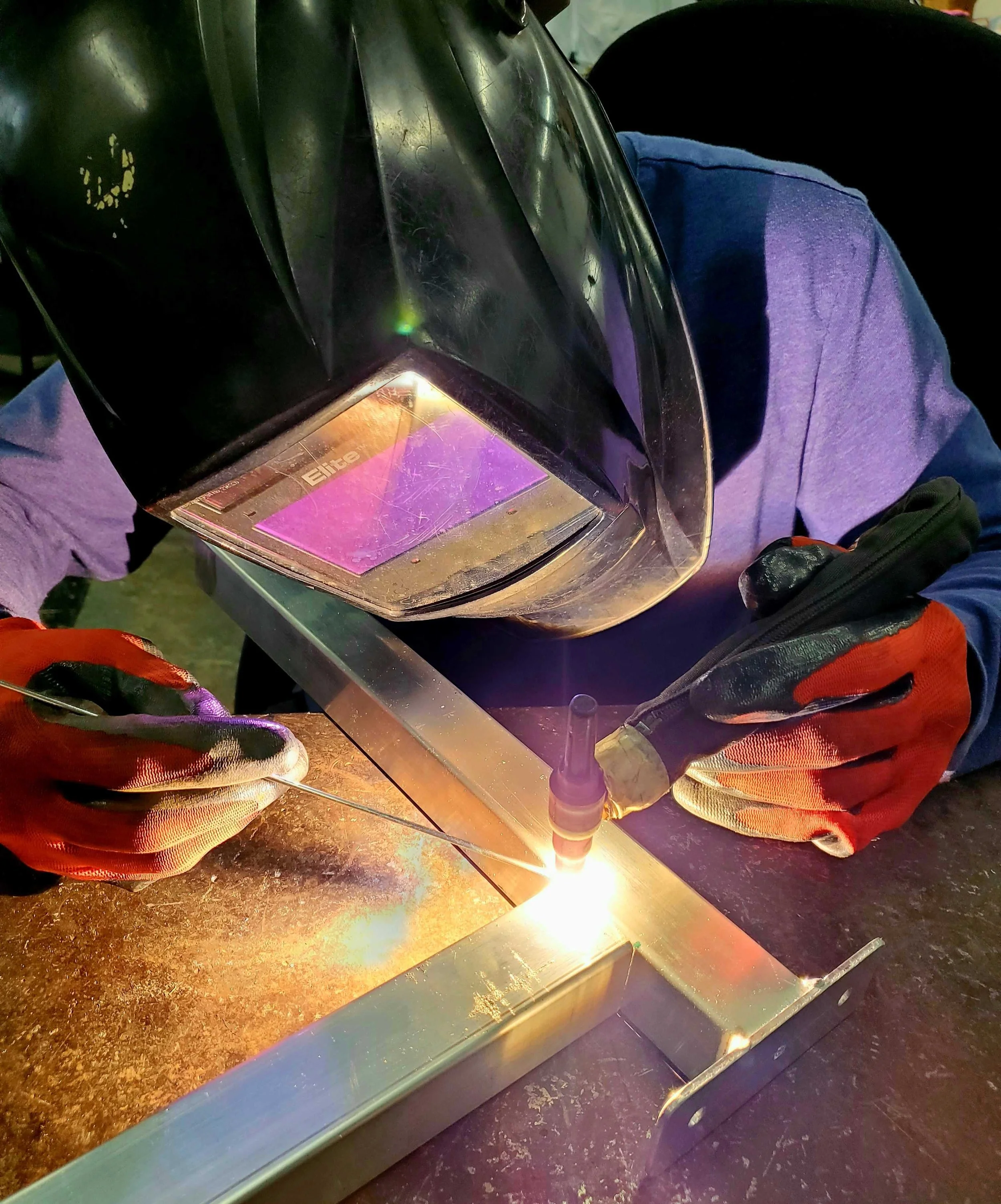
TIG and MIG are two of the most common welding processes used in custom metal fabrication. Both can produce strong, dependable welds, but they do not offer the same advantages on every project. TIG welding is known for its control, precision and clean appearance. MIG welding is generally faster and well suited to longer joints, thicker materials and production work. Choosing between TIG and MIG depends on the metal, material thickness, joint design, required appearance, quantity and intended use of the finished component. At Panzer Aluminum, we provide TIG welding and MIG welding for customers throughout Broward, Miami-Dade and Palm Beach counties. Here are the practical differences between the two processes.
What is TIG Welding?
TIG stand for tungsten inert gas welding. Its technical name is gas tungsten arc welding, or GTAW. The process creates an electric arc between a non-consumable tungsten electrode and the workpiece. When filler metal is needed, the welder adds it separately by hand. Because the heat and filler metal can be controlled independently, TIG welding gives an experienced welder excellent control over the weld puddle. It is frequently used on aluminum, stainless steel and thinner materials where accuracy and appearance are important.
TIG welding is often a good choice for:
Thin aluminum or stainless steel
Small or detailed components
Visible welds where appearance matters
One-off custom parts and prototypes
Repairs requiring careful heat control
Projects requiring precise starts and stops
TIG welding is generally slower than MIG welding. The joint must be properly fitted and thoroughly cleaned, and the welder must coordinate the torch, filler rod and heat input. That additional time and skill can increase labor costs, but it may be worthwhile when control, precision and finished appearance are priorities.
What Is MIG Welding?
MIG stands for metal inert gas welding. Its technical name is gas metal arc welding, or GMAW. MIG welding continuously feeds a consumable wire electrode through the welding gun. The wire acts as both the electrode and the filler metal. The continuous wire feed allows welds to be deposited more quickly than TIG in many applications. This makes MIG welding useful for longer joints, thicker materials and production work where speed and consistency matter.
MIG welding is often a good choice for:
Longer welds and larger assemblies
Moderate or thicker materials
Carbon-steel fabrication
Aluminum tube, plate and larger assemblies
Repeat parts and production runs
Projects where efficient welding is more important than a decorative bead
MIG welding aluminum requires the correct equipment and technique. Aluminum wire is softer than steel wire, so a suitable wire-feeding system is needed to move it consistently without tangling or feeding poorly.
TIG vs. MIG Welding: The Main Differences
Welding speed: MIG is usually faster, especially on longer joints and production parts.
Precision: TIG gives the welder greater independent control over the arc, heat and filler metal.
Thin materials: TIG is often preferred for thin aluminum and stainless steel.
Thicker materials: MIG can deposit more filler metal quickly and may be more efficient.
Weld appearance: TIG commonly produces a cleaner and more refined visible weld.
Production quantities: MIG is often better suited to repeat parts where efficiency and consistency matter.
Custom repairs: TIG can provide better control around edges, corners and delicate components.
These are general guidelines—not absolute rules. Joint access, alloy, thickness, fit-up, distortion risk and finish requirements can all change which process is best.
Is TIG or MIG Better for Aluminum?
Both processes can weld aluminum successfully. TIG is commonly chosen for thin aluminum, intricate repairs, short welds and projects with highly visible joints. It allows the welder to control the arc and filler addition separately, which is helpful when managing heat around edges, corners and delicate components. MIG can be more efficient for thicker aluminum, long seams and larger assemblies. It can also be a practical choice for repeat parts when the material thickness and joint design suit the process. The aluminum alloy matters as well. Some aluminum alloys are readily weldable, while others require special consideration or may not be appropriate for conventional fusion welding. The filler alloy must also be compatible with the base material and the part’s intended use. If you do not know the alloy, provide any available material records, markings, drawings or background information about the part. For a repair, contamination and the history of the component may affect whether a reliable weld can be made.
Is TIG or MIG Better for Stainless Steel?
TIG welding is widely used for stainless steel when the material is thin, the weld is visible or precise heat control is needed. It can produce a clean joint with limited spatter and is frequently selected for custom architectural components, sheet-metal assemblies and detailed repairs. MIG welding may be a better fit for thicker stainless steel, longer seams and production quantities. Its faster deposition rate can reduce welding time on an appropriately designed assembly. Stainless steel can distort or discolor when too much heat is introduced. Joint design, fit-up, cleaning, shielding gas and heat control all affect the finished result. The process should be chosen based on the complete part—not simply because one method is assumed to be better.
Is TIG or MIG Better for Carbon Steel?
MIG welding is a common choice for general carbon-steel fabrication because it is productive, versatile and suitable for a wide range of material thicknesses. It works well for frames, brackets, equipment components and many production assemblies. TIG may be used when the steel is thin, the welds are small or a controlled, refined appearance is required. However, using TIG on a large carbon-steel assembly can add significant labor without providing a practical advantage if the welds will eventually be ground, coated or hidden.
Which Process Creates a Stronger Weld?
Neither TIG nor MIG is automatically stronger in every situation. A sound weld produced with the appropriate procedure can meet the needs of the application using either process.
Weld performance depends on several factors:
Base-metal and filler-metal compatibility
Joint design and fit-up
Weld size and penetration
Material cleanliness
Heat input and distortion control
Welder technique
Loading and service conditions
A visually attractive weld is not proof that a joint is properly designed. At the same time, a less decorative weld is not necessarily weak. The finished component must be evaluated according to how it will be used.
Which Welding Process Costs More?
TIG welding generally requires more labor per inch of weld because the process is slower and more manually controlled. MIG welding can reduce welding time on larger parts and production quantities, but the lowest-cost process still depends on the complete fabrication plan. The weld is only one part of the price. Material, cutting, forming, machining, fit-up, fixturing, grinding, finishing, inspection and quantity can have an equal or greater effect on the final quote. Good part design can lower costs before welding begins. Consistent dimensions, practical tolerances, accessible joints and repeatable fit-up help reduce handling and welding time.
What Should You Include With a Quote Request?
The more complete the information, the more accurately a fabrication shop can evaluate the work.
Whenever possible, provide:
A dimensioned drawing, sketch or physical sample
Material type, alloy and thickness
Required quantity
The part’s function and expected loading
Indoor, outdoor, coastal or marine exposure
Cosmetic expectations for visible welds
Required finish, such as mill finish, brushing or powder coating
Installation requirements
Required completion date
Clear photographs for repairs or modifications
If a formal drawing is unavailable, send overall dimensions and photographs from multiple angles.
Panzer Aluminum can review PDF, DWG, DXF and JPG files when evaluating a project.
TIG and MIG Welding Services in South Florida
Panzer Aluminum is a family-owned custom metal fabrication shop located in Wilton Manors. We have served South Florida since 1979. We work with aluminum, stainless steel and carbon steel on custom parts, repairs, prototypes, sheet-metal assemblies and production fabrication. Some projects clearly favor TIG welding. Others are better suited to MIG. Larger fabricated assemblies may use more than one welding process or require additional cutting, forming, machining and finishing operations. Our job is to evaluate the entire project and select a practical fabrication approach based on the material, application, appearance and quantity.
Need help with a welding or fabrication project? Contact Panzer Aluminum, call (954) 566-2963, or send your drawings, photographs, dimensions and quantity to Weld@panzeraluminum.com.
Frequently Asked Questions
Can aluminum be MIG welded?
Yes. Aluminum can be MIG welded using the appropriate filler wire, shielding gas, wire-feeding equipment and technique. MIG is often efficient for thicker materials, longer welds and larger assemblies.
Does TIG welding always look better than MIG welding?
TIG commonly produces a finer and more controlled visible bead, but appearance depends on the joint design, material condition and welder technique. MIG can still produce clean, consistent welds when it is properly set up and performed.
Can the same welding machine weld aluminum and stainless steel?
Some welding power sources can be configured for multiple metals, but each material requires the correct process setup, filler metal, shielding gas and preparation. Aluminum may also require specialized current control or wire-feeding equipment.
Should visible welds be ground smooth?
Not automatically. Grinding can change the appearance and may reduce the effective weld size if performed incorrectly. Whether a weld should remain visible, be blended or be fully ground should be established before fabrication begins.
Can Panzer Aluminum help if I do not have a drawing?
Yes. Start by sending clear photographs, overall dimensions, the required quantity and an explanation of how the part will be used. Our team can review the information and identify what else is required to quote the work